
There is something absolutely fascinating to me about our desire to document. This applies to so many things — journalling, taking and hoarding photos, keeping boxes overflowing with birthday cards.
I’ve been amused by the Goodreads v Storygraph debate on here recently, and what a non-reader would make of such a niche concept as how you track, rate and discuss your books.
Bookstagram turned me off rating books, because I couldn’t distil all the subjectivity associated with a book review into a number between one and five. What’s more, how I feel about a book often evolves over time — I need a digestion window to work out those feelings. What hasn’t changed is my inner need to document what I read and when I read it (Storygraph all the way — lblundell_23).
This website, set up by Dan Pelzer’s daughter Marcie, collates the handwritten and typed up logs Dan completed each year from 1962 until his death in 2025. He read 3,000 books, averaging about 80 a year.
Browsing these preserved lists, squinting at fading typeface and scarcely legible writing, I was amazed to find that every book was borrowed from a library. The man read an incredible quantity of non-fiction on everything from geography to misogyny, so you just know he will have been a fabulous conversationalist.
You can see him fall in love with various authors and devour their oeuvre over a few months — 1996 was his year of Edith Wharton. His children can map the arc of his life through what he was reading at the time, including the books that kept him company while he awaited news of their births. This legacy, both as a personal gift to his family and a public one for nosy book lovers everywhere, is enough to convince me of the value derived from our desire to document.
On that note, here’s what I’m reading, writing and recommending this August.
Novel update
First draft word count: 17,429
Still not sure what genre it is.
What’s on my desk?
A new feature! Taking advantage of Murmurations’ embryonic state to experiment, so bear with me.
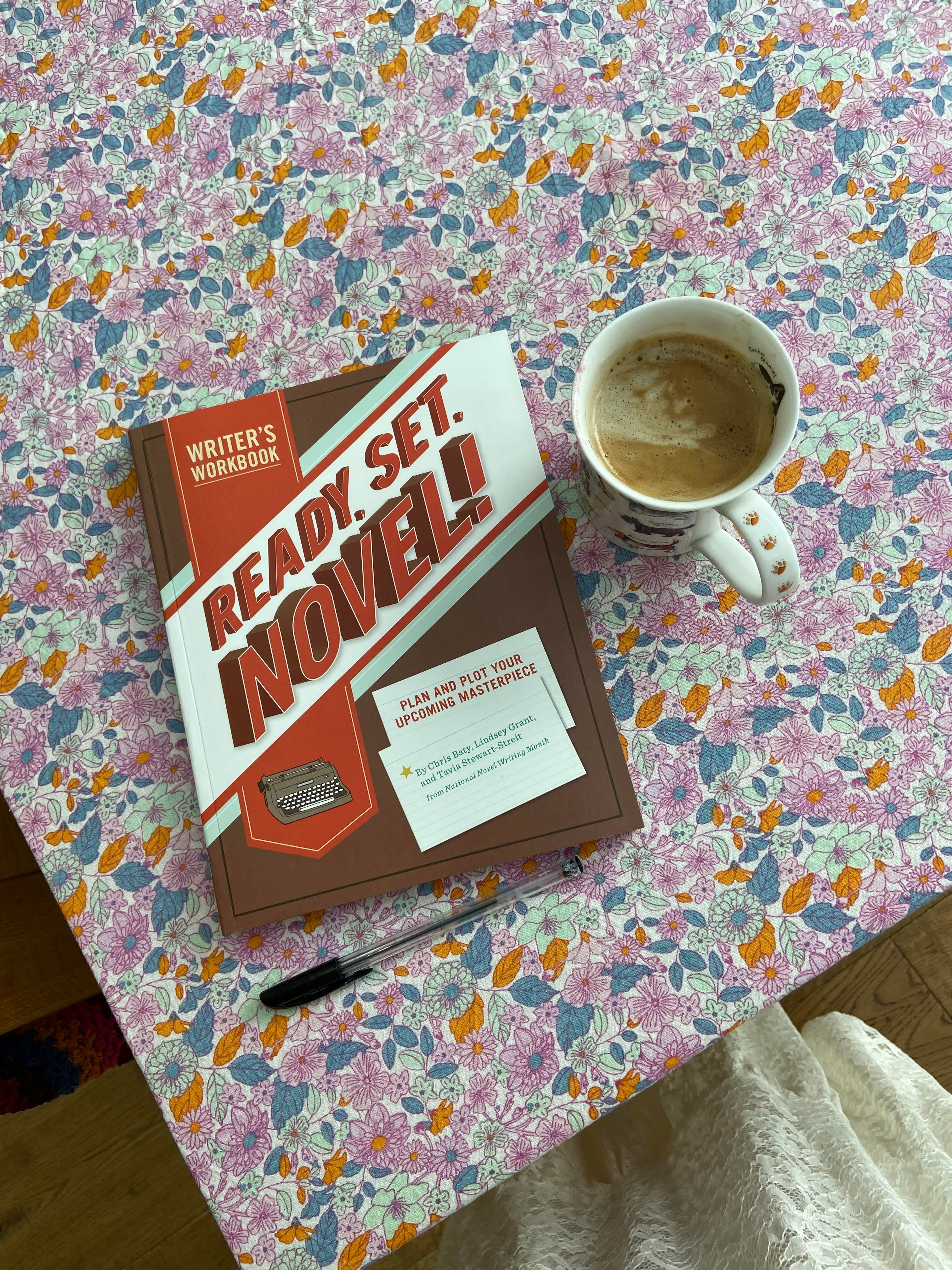
Two things to spotlight:
Novel planning workbook
Now, I know what your thinking — is this like, a paint-by-numbers but for writing books? I can relate, and felt slightly ashamed when I bought it. But, now? I am loud and proud about my workbook! It comes from the people behind National Novel Writing Month and is great for when you’re scrabbling around for plot ideas or need to get a stronger handle on your characters. There are loads of exercises in it and I dip in and out, rather than progressing from start to finish. Much like my approach to writing the bloody thing, actually.
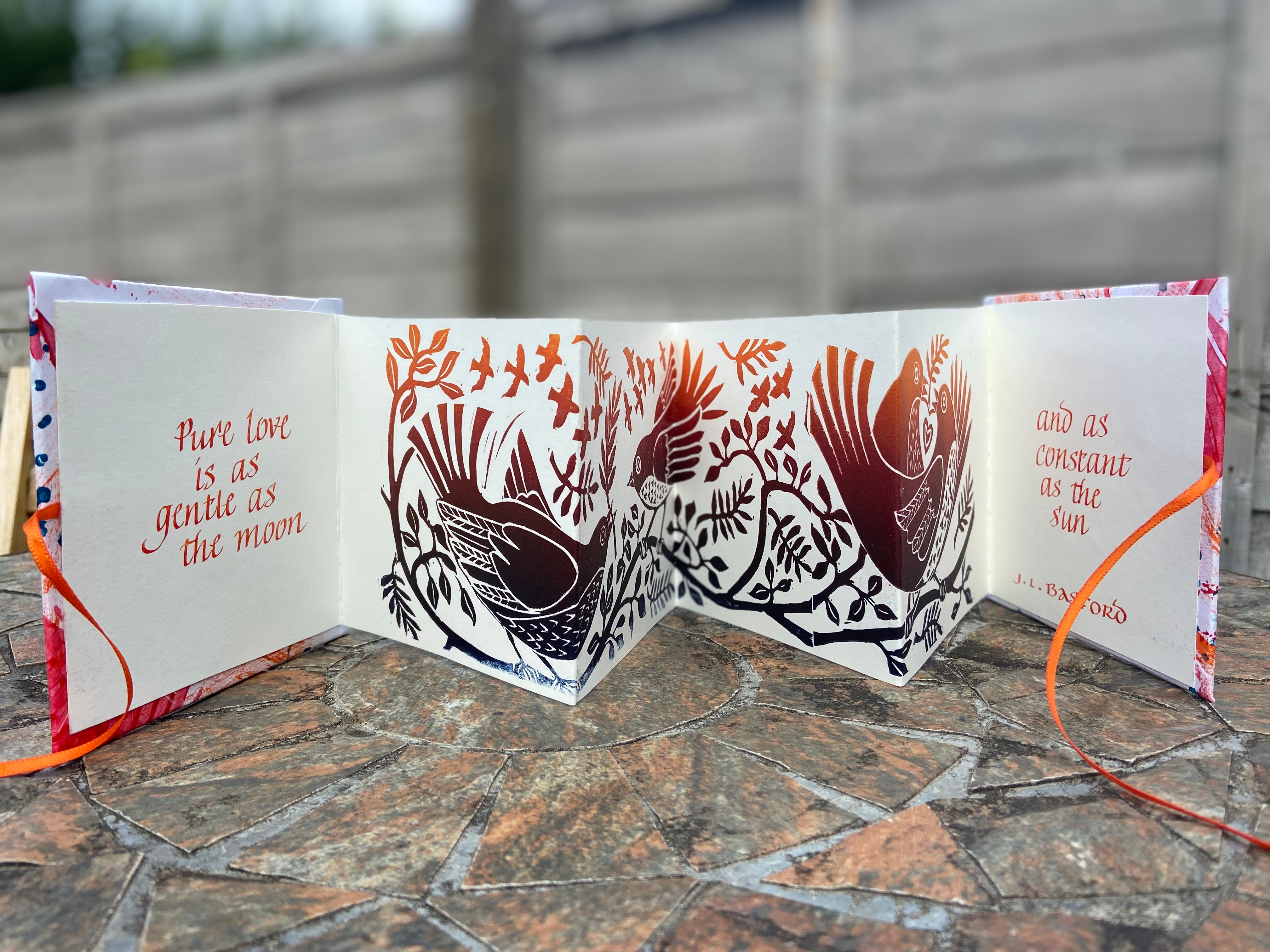
Something far less practical and much more beautiful
I’ve never seen anything quite like this before, and am curious as to whether you have. My Dad gave it to me for my birthday and it’s by a fellow exhibitor at the Salcombe Art Club this summer — Caroline Barker. It makes for a lovely desk feature in amongst more utilitarian monitors and staplers, plus it’s a gift you can be sure no one else will give them.
Word of the month
Sapiosexual: being attracted to someone’s brain. Nice.
Reading diaries


My Brilliant Friend read along— week one (and a half).
I’m thrilled to be taking part in My Brilliant Ferrante, a month-long deep dive into the anonymous Italian novelist, Elena Ferrante, organised by Kolina Cicero. It’s strange limiting myself to 90 or so pages per week, especially when the writing is this good, but I’m trying to embrace a slower pace.
This first section introduces Lina and Elena as young girls living in Naples, witnessing violence on a daily basis and fighting to attend school for as long as possible. As they grow into teenagers, it’s clear they are frenemies — dependent on one another in different ways and jealous when the other progresses further. The best part so far has to be when the girls are gifted some money by the local mafia-esque Don and they spend it on a shared copy of Little Women, which they read side by side.
As you read Ferrante you wonder how and why it’s so good. There’s little flowery prose — in fact the writing feels immediate and universal, which is all the more magical for the fact its translated from the original and no one knows who the author is.
The read along marks Women in Translation month, an annual event to celebrate unique voices and highlight the gender imbalance in translated literature. It’s only right, then, to talk about Ann Goldstein, Ferrante’s translator. My favourite fact about her is that she only started learning Italian at the age of 37, which means there’s still hope for me.
Ann brought Ferrante to the anglophone world, and frequently discusses her works with students and literary audiences, continuing to bridge the gap between the beloved novelist and her followers. Both would, surely, be dream dinner party guests.
Recently finished:
Romantic Comedy by Curtis Sittenfeld
Lucky Jim by Kingsley Amis
Madame Bovary by Gustave Flaubert
It’s been an outrageously strong reading month. I loved Lucky Jim so much I’m writing an essay on it, so I’ll save my thoughts and exaltations for later.
Romantic Comedy -
Am I in my romance era? I’m certainly reading more of them than usual this summer, which I guess makes sense as my work-in-progress hinges on a romance and, you know, summer.
I enjoyed this from Curtis Sittenfeld, though I didn’t love Noah as a hearthrob. Heroine Sally is brilliant and so are the descriptions of her work and colleagues at The Night Owls, which is essentially Saturday Night Live. I enjoyed this fromSmart Romance by Rena Rani, which compares Romantic Comedy to Seven Days in June by Tia Williams, which I’ve not read. Rena’s series ‘love at the line level’ is great for working out the sort of romances that appeal to me and why.
Madame Bovary -
Blimey O'Reilly this was fantastic. It’s a slow burn, and for at least 100 out of 330 pages I was so aggravated by Emma's awfulness combined with the boredom of her life in various Norman towns I thought I’d never warm to it. But! But!
While I never fully came around to the story, I fell hook, line and sinker for the way Flaubert told it. I couldn’t look away as Emma self-destructed, her house of cards collapsing in painful slow motion. I’m now fascinated by Flaubert, and how a provincial member of the bourgeoise could have written this novel, just before his thirtieth birthday, and so brilliantly excavated the darkest depths of the female psych.
The themes of science vs religion, reason vs desire, reminded me of The Brothers Karamazov, but the storytelling is much more succinct. Who knew Flaubert pioneered a new literary style with this novel, inspiring the likes of Kafka and Sartre? Ok probably a lot of people, but not me.
“She had bought herself a blotter, a writing case, a pen and some envelopes, although she had no one to write to; she would dust off her whatnot, look at herself in the mirror, pick up a book, then begin to daydream between the lines and let it fall to her lap. She longed to travel, or to go back and live in the convent. She wanted both to die and to live in Paris.”
Madame Bovary, Gustave Flaubert
Up next:
I’m experiencing that mild panic when one season is drawing to a close and you want to fit the right reads in or you’ll have to wait until next year. By the time you’re reading this I’ll be on the French Riviera for my brother’s wedding, and in my suitcase is Cyanide in the Sun: And Other Stories of Summertime Crime, which marks my first ever British Library Crime Classic. I’m hoping the short stories format enables me to get some good reading done amidst a whirlwind of family time. I’m also packing You are Here by David Nicholls, because its just so obviously going to be a great read and that’s the sort of certainty I need in this late phase of summer.
Recommending
I’m on a TV roll! (Read: I have watched two series’ this year).

I spent late July and early August watching Too Much, the new 10-episode series directed by Lena Dunham, about a heartbroken American girl who comes to London with work, expecting to live out her best Jane Austen life. On her first day, she discovers ‘an estate in Hackney’ means something quite different from the country estates in her favourite period dramas, and inadvertently sets herself on fire with a candle.
The show is ever so slightly ‘too much’ for me overall, but our heroine Jessica is not. I love her, and her ugly chihuahua Astrid, with my whole heart. I feel lucky that I’m blissfully unaware of Lena Dunham’s personal life, so I can enjoy it without having to engage with the speculation of her fans and critics that it is her own revenge story.
It’s outrageous and will make you belly laugh. Jess reminds me of me and my close friends, who have definitely all been considered too much at times. For me, having attended an English boarding school and lived in London for a while, Felix and his social circle fell a little flat and prompted big and small cringes throughout.
Jess for Queen, though.
And she has a wonderful collection of nightgowns.
Oh and the hot priest from Fleabag is in it.
Podcast: Bella Mackie on “In Writing” with Hattie Crisell. Bella Mackie, author of How to Kill Your Family and What a Way to Go is known for being ultra no-nonsense, which is often a welcome antidote in the creatives-being-interviewed space. I recently discovered In Writing and am working my way through some of the backlist. Bella is refreshing on not being confined to a genre and writing books when you’ve never been trained to write books.
Podcast: London Writers' Salon with Gretchen Rubin. I listened to this while cleaning my kitchen one Sunday morning and, let me tell you, Gretchen’s infectious energy dragged me through those chores. Best known for The Happiness Project and the Four Tendencies Framework, she is someone who loves a project and sets herself a lot of goals, which I can relate to. I ended up taking the Four Tendencies quiz and came out as an Upholder, which is no great surprise. Later down the line, I'm planning to use this quiz as a character development tool for my novel.
Adored this article from Wendy Varley on her coming-of-age Summer working as a ‘dogsbody’ in a hotel in North Yorkshire. First jobs are always formative, and young Wendy is mocked for being from the south (of Yorkshire) and cuts her hospitality teeth in an environment that’s equal parts harsh, loving and hilarious.
Unmapped Storylands from Elif Shafak is one of my very favourite Substacks, and her recent article on the disappearance of languages and the meaning they take with them gave me much pause for thought. Did you know there are over 200 different words for rain in Hawaiian?
Who doesn’t love two book nerds in conversation? Highly recommend Pandora Sykes and Jack Edwards: Constant Reader in conversation in Pandora’s recent post.
Last but not least, the article that’s rightly rocked Substack over the last month. You Were Lied to About Exercise is an absolutely fascinating read from Erin Nystrom and exactly what I needed to hear right now, as the Instagram algorithm is attempting to convince me to do a variety of sadistic challenges to become perfect before my wedding in six months. It includes plenty of science as well as wit and humour in every paragraph, and is well worth the long read.
Thank you for reading Murmurations — it means an awful lot.
This newsletter is free to read, but please consider donating to Bookmark, the charity I’m running a half marathon for in September.
We’re all here because we love the written word in whatever form, but more than 1 in 4 children in England leave primary school unable to read well. This is an inequality problem, of course. Bookmark connect disadvantaged primary schools to 1-1 reading mentors, helping those who are struggling to learn to read and instilling a reading for pleasure culture in schools. You can donate here and I thank you very much in advance.
"I couldn’t distil all the subjectivity associated with a book review into a number between one and five." Yes, this! Happy travels and reading.
I haven’t watched Too Much, but the actress playing Jess, Meg Stalter, is fantastic in Hacks, a brilliant series, which I highly recommend. The nightgowns she wears are from an indie British brand If Only If.