
As I type this newsletter, we're on the first tentative day of February after about 489 days of January. I am still very much in England, which feels too bleakly freezing to be reconciled by any amount of pastoral classics, and I am legally single.
By the time you read it, however, I will be winging my way across the Atlantic as a legally married woman. I am deeply looking forward to eight hours on a plane without updates on the Epstein files — and my honeymoon, of course.
It’s safe to say, then, that this newsletter nearly didn’t come to be. I’ve had a few things on my plate. However, in the frozen wasteland that is January I also had a lot of time to sit tight and absorb culture in all its restorative forms, and there were simply too many things I want to share with you that couldn’t wait until March.
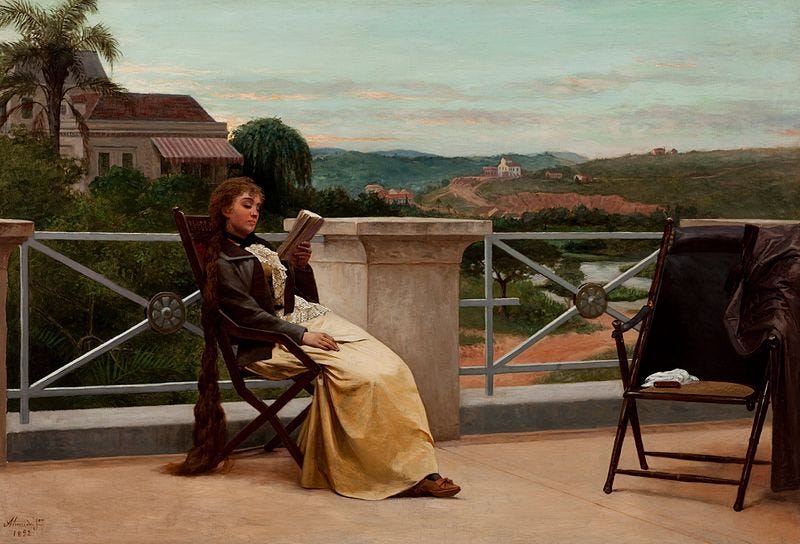
So it’s been an unusual start to the year for me, but I’m determined to do January differently going forwards. I’ve decided the whole New Year mindset is quite frankly insane, and we’d do better to extend the festivities until February. I don’t mean I’m going to keep an inflatable Father Christmas outside my house until spring, but I do believe we’ve lost our way by making such a sharp left turn away from joy as soon as the calendar flips over.
We can learn a lot from the hygge concept popularised by Scandinavian communities, who live in almost complete darkness during the winter months, but also by looking back further in the history books. What happened to twelfth night revelries, or the ancient British folk festival, Wassail, traditionally held in January to bless apple orchards, thus ensuring a healthy harvest and warding off evil spirits?
I learnt about that last one in Victoria Harrison’s January Notebook and came away with plenty more food for thought besides. Going forward, I’m leaning into year beginnings that involve lots of light, laughter and gentle goal-setting.
Word of the month
Not a word, but rather a lexicon love. I recently heard Caroline O’Donaghue talk about the notion of ‘a real shepherd’s pie of a book.’ She was, at the time, sat in a pub reading a novel while eating a shepherd’s pie. The idea is that the book is so good you can only consume something that’s viable to eat one-handed while you’re reading.
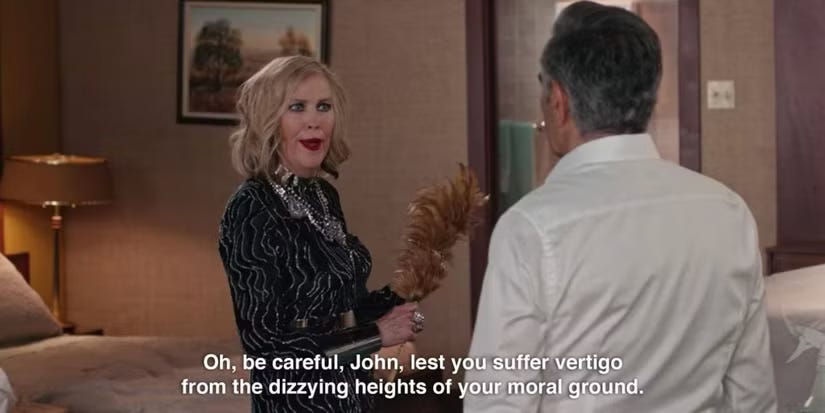
Loving: Using M.A.S.H as a writing prompt. Sorry if you have no recollection of playing this as a teenager, but it was the pinnacle of entertainment and you should immediately Google it. I recently came out of the game with the following to kickstart some flash fiction:
Object: My favourite coat
Obligation: To keep smiling
Secret: Preferring one cat to the other
Desire: Inertia
Loathing: Umm, all the rain? Usually I’m a fan, but I feel slightly damp all the time.
“In England it has been raining, more or less, for a decade.”
Bring up the Bodies, Hilary Mantel
Recommending
Sarra Manning on the 10 best novels she read in 10 years as a literary editor.
Jack Edwards taking down the book snobs.
By Thursday’s Child: obsessed with this illustrator’s quirky prints and cap collection inspired by Lily Allen’s West End Girl.


Film: Hamnet
There is, of course, an enormous amount of discourse around this film. I sobbed and sobbed, at both the book and the film, but don’t buy into the criticism that it’s mere ‘grief porn.’ It’s hard to watch and I wouldn’t have got through it without a large gin and tonic, but I think that’s because it unflinchingly actualises something we never dare to look directly at if we haven’t experienced it ourselves: the possibility of losing a child or close family member. My main comment on Hamnet is the Casting Director deserves their own Oscar. I came away with a huge crush on Jessie Buckley (sorry Paul), and utter astonishment at the skill of the child actors who were so crucial to the storytelling. Back to Jessie: brave, soul-destroying yet life-affirming, imperfect perfection. No notes.
Podcast: Bookshelfie — The Women’s Prize podcast
This new (to me) podcast has a wonderfully simple premise: female guests share the five books by female authors that have shaped their lives. Its Desert Island Discs but with the emphasis, thankfully, on the books. I’ve only listened to two episodes so far and have already been touched by the refreshing takes aired. Exhibit A: the great Elif Shafak:
“Sometimes readers — usually male readers — say ‘so much is happening in the world, I want to follow it, so I read about technology, finance, economics, politics… but I don’t read fiction, my wife reads fiction.’ As if it’s a woman’s domain. And I feel sad when I hear such things, because i think we live in a world where every one of us needs to connect with our emotional intelligence — I don’t know a single person who doesn’t need to do that. But also I think in order to understand the world better we need fiction; fiction gives us the emotional intelligence and empathy we need to make sense of the world.”
Reading diaries
In the spotlight: The Land in Winter by Andrew Miller
Ok I know we’re only 1.5 months into 2026, but this is the one to beat this year for me. The Land in Winter is set during the big freeze of 1962-3 — one of the coldest on record in the UK. Miller uses these extreme circumstances to create a dramatic backdrop to what may otherwise seem (at first glance, anyway), fairly ordinary lives.
The novel is concerned with two couples: Farmer Bill and his wife Rita, and Doctor Eric and his wife Irene. There’s drama of the Emmerdale sort unfolding in this rural setting — affairs, medical emergencies, car crashes — but it’s all firmly within the realm of possibility. In fact, what I love most about Miller’s storytelling is the sheer credibility (and that’s coming from a fantasy fan).
The sixties details are wonderful; the space race, the bleak sceptre of war and the growing emancipation of women are all prevalent in a way that doesn’t feel shoe-horned in. I’ve seen this book described as slow paced and reflective, ‘glacial’ according to one punny Guardian critic. But I found myself unable to put it down, so invested was I in the lives of these heartbreakingly ordinary, hopeful and fearful characters.
My year with Shakespeare
2026 is my year with Shakespeare — a deep dive into the written plays, catching as many performances on screen or in the theatre as I can, and exploring retellings and biographies of the Bard.
Following Hamlet, my most recent adventure was The Winter’s Tale and I loved it. It wasn’t so much the story itself I adored, though jealousy has to be one of the most timeless plot drivers, but the characters. Specifically, the female characters. Hermione, Paulina, Perdita! Wonderful, strong-willed, individual women. Some of Paulina’s speeches had me gasping, as well as that love declaration from the amorous Florizel. It’s going in my spring, rather than winter, reading guide because of all the wonderful descriptions of pastoral Bohemia.
So that’s one of the great run of tragedies and one of the later Romantic comedies ticked off… where to next? A straight up comedy for spring, methinks, with Much Ado About Nothing.
“Every life has its kernel, its hub, its epicentre, from which everything flows out, to which everything returns.”
Hamnet, Maggie O’Farrell
Briefly noted
I’ve had such a stonking start to the year on the reading front that none of these really deserve to be briefly noted, but alas such are the constraints of time and space. Go, read them all!
The Full Moon Coffee Shop by x. My January in Japan book of choice. Talking cats, astrology, gentle course-correction. Comforting perfection. Very little plot, lots of vibes.
His Dark Materials by Philip Pullman. Read them as a child, I think, and could remember little more than the armoured bears. Very scary for children’s books. The Subtle Knife is the best one and you can’t persuade me otherwise. Ruth Wilson’s audiobook narration is what bedtime story dreams are made of, if it weren’t so full of horrors.
Hamnet by Maddie O’Farrell. Sensual, earthy, breathless. I loved the way O’Farrell creates and bravely holds suspense in the opening chapters. Perhaps a tad too obviously ‘literary’ in places for me.
Far From the Madding Crowd by Thomas Hardy. My first ever Hardy and I definitely want to unpack this more. WHAT A STORY?! Bathsheba is definitely going down as one of my favourite heroines of classic literature.
The Rachel Incident by Caroline O’Donaghue. So warm and fizzy, like I knew any novel of Caroline’s would be. A girl and her gay best friend, coming of age the hard way in recession-stricken Cork.
Currently reading
Cheerful Weather for the Wedding by Julia Strachey
Up next
What’s in my honeymoon suitcase? I’ve opted to take two chunky secondhand paperbacks that have been taking up space on my shelves and look like they’re longing to be devoured and covered in suncream: Atonement and Rachel’s Holiday. Wells, on other hand, is a rather smart Penguin Archive I’m hoping to read in one sitting on the plane.
Atonement by Ian McEwan
Rachel’s Holiday by Marian Keynes
The Time Machine by H.G. Wells
That’s a wrap. See you on the other side!
Congratulations Lydia! I loved the pics on Insta - you looked so gorgeous. Enjoy Atonement - it’s a favourite of mine - as is Ian McEwan generally. Have a wonderful honeymoon - hopefully with no rain involved!!
The Rachel Incident was such a fun read! O’Donaghue perfectly captured that buzzy feeling of being young and housesharing in Cork... then growing up. Have a fab honeymoon!